Revolution App Online School
Digital Products & Print on Demand
Create a useful original product and test demand before scaling.
6 video classes · 5 written lessons with exercises
Video classes
 Revolution AppLesson 1
Full Print On-Demand Tutorial For Beginners (2026 Version)
C.U.Online · Video 1 of 6
Lesson 1 reviews 5.0 · 4 reviews
Marilyn H.Tulsa, OK · 119 days ago
Clear about how long it takes to get the first sale. No false promises. Worth every minute.
Wanda M.Tulsa, OK · 168 days ago
Clear about how long it takes to get the first sale. No false promises.
Kevin W.Tulsa, OK · 37 days ago
Clear about how long it takes to get the first sale. No false promises. Thank you for including this one.
Terry F.Tulsa, OK · 86 days ago
Clear about how long it takes to get the first sale. No false promises. Highly recommend it.
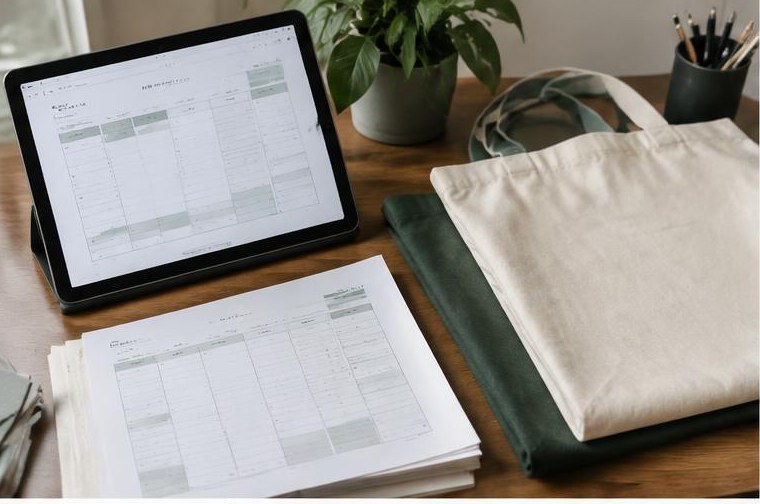
Introduction
This book is a practical starting point, not a promise of income. Read the chapters in order, then test one small offer or product before spending heavily. Use invented information for practice and keep confidential client information out of your portfolio. Laws, taxes, licensing and platform terms may vary; consult current official guidance and qualified professionals when needed.
Your goal: An original product prototype, listing and rights checklist.
All scenarios and pricing calculations are illustrative, not promises of business results.
Lesson 1
Choose a useful product
A digital product solves a specific problem, such as a household budget tracker or gardening planner. Print on demand manufactures a physical item after an order, but quality, support and margins still matter. Validate the need before building a large catalog.

Solve one practical buyer problem
A useful product is easier to explain than a vague collection of attractive designs. Decide who will use it and in what situation. A digital planner and a printed shirt have different delivery, support and margin requirements.
A product brief
Create a printable garden watering log for beginners with a date, plant, watering check and notes area. Define page size and file format. This is a focused product concept, not evidence that buyers will purchase it.
- 1Choose one buyer and problem
- 2Review customer questions without copying products
- 3Decide digital download or physical product
Worked example: decisions and trade-offs
Your fictional customer needs a simple weekly planning tool. You create a small original prototype, test whether it is understandable and, for print on demand, order a sample before relying on supplier claims. Product usefulness and rights matter more than catalog size.
Start with a specific problem and buyer rather than a generic idea like selling templates. Ask what the person does today, what is inconvenient and which output would be useful. Review public questions and competing offers without copying their designs. Decide whether a digital file or physical item serves the need better. A digital product has support and compatibility requirements; print on demand adds manufacturing and delivery dependencies. Describe one small test that can establish usefulness before you spend on a large collection.
Write your answer before looking for a ready-made template. Identify the evidence you used, the assumption most likely to be wrong and the person who should approve the next step. Then describe a different choice and explain why it is less suitable in this particular case.
Define the problem before choosing a tool
Write the starting condition in plain language. Who experiences the problem, how often does it occur and what does it prevent them from doing? Separate an observed fact from a guess about its cause. A statement like the process takes too long needs an example and a baseline; a statement like everyone needs an app is already assuming the solution. Use a short conversation or a fictional practice case to identify what matters. Ask which constraints cannot change, including available time, existing systems and permissions.
Next, define a modest result you can verify. A useful result is a deliverable or observable improvement, not a claim that someone will become successful. Record what is outside your assignment and which decisions belong to another person. This boundary is not an obstacle to being helpful: it prevents you from taking responsibility for matters you cannot control. Before moving forward, explain the problem and proposed result in one paragraph. If that paragraph is difficult to write, reduce the scope until the relationship between need and work is clear.
Action checklist
- Choose one buyer and problem
- Review customer questions without copying products
- Decide digital download or physical product
Workbook exercise
Write a product brief with intended buyer, problem and concrete deliverable.
Lesson 2
Create and check rights
Use your own content or assets licensed for the exact commercial use. A standard design-tool license may restrict reselling templates or using standalone assets on merchandise. Avoid logos, celebrity likenesses and copyrighted characters without rights.
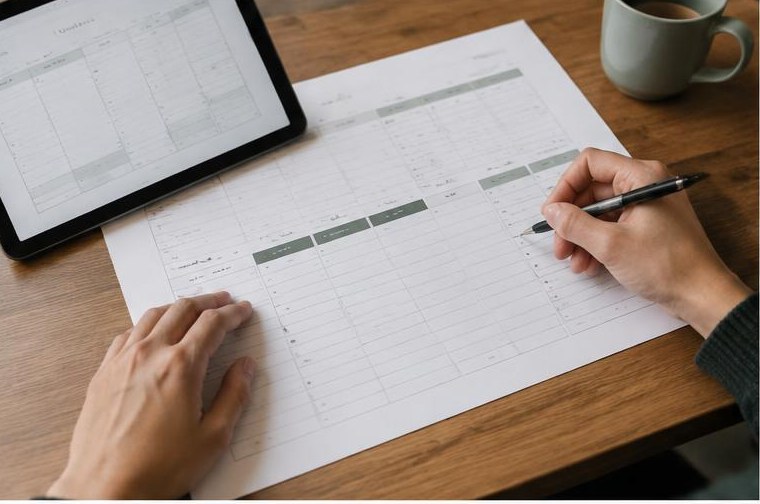
Check the license for the exact use
Permission to use an asset in a design is not always permission to resell it as a template or print it on merchandise. Save license terms and confirm restrictions before publishing. Original design does not automatically eliminate trademark concerns.
A rights record
For each font, photo or graphic, record its source and license and whether downloadable resale or merchandise use is allowed. If permission is unclear, choose a different asset or obtain clarification before selling.
- 1Make an original prototype
- 2Read font, image and template licenses
- 3Keep a license and source log
Worked example: decisions and trade-offs
Your fictional customer needs a simple weekly planning tool. You create a small original prototype, test whether it is understandable and, for print on demand, order a sample before relying on supplier claims. Product usefulness and rights matter more than catalog size.
Build a prototype with original text and assets whose licenses permit the intended use. Test it from the customer's perspective: open the file, follow the instructions, print if relevant and check whether the layout remains readable. A design that looks attractive on your monitor may fail on ordinary paper or a different device. For physical products, inspect a sample for material, print placement and durability. Keep a rights log identifying asset source, license and restrictions. Do not assume an asset's availability in a tool gives you unlimited resale rights.
Write your answer before looking for a ready-made template. Identify the evidence you used, the assumption most likely to be wrong and the person who should approve the next step. Then describe a different choice and explain why it is less suitable in this particular case.
Build a practice example that can fail
Practice is most valuable when it reveals errors before a real customer is affected. Create a small example containing one normal case, one incomplete case and one exception. Use invented information and make the expected outcome explicit before you begin. Then perform the work using the same sequence you would use in a real assignment. Record where you hesitated, which instructions were unclear and which assumptions were unsupported. A sample that always succeeds because it avoids difficult cases teaches less than a realistic example with a visible correction.
Review the sample as if someone else had created it. Can a beginner understand the output? Can a reviewer trace an important decision back to its evidence? Is private information exposed unnecessarily? Ask a willing reviewer to follow the instructions without coaching, then note where they need help. Improve the process rather than blaming the reader. Preserve the revised version and a short change log so your next attempt starts from what you learned. The objective is dependable work, not a perfect-looking portfolio piece with no explanation of how it was made.
Action checklist
- Make an original prototype
- Read font, image and template licenses
- Keep a license and source log
Workbook exercise
Create a rights checklist listing each asset, source, license and allowed use.
Lesson 3
Test quality and delivery
Test a digital file on the devices your buyer may use. Provide file type, size and printing instructions. For print on demand, order a sample when feasible and check print quality, sizing, packaging and delivery estimates.
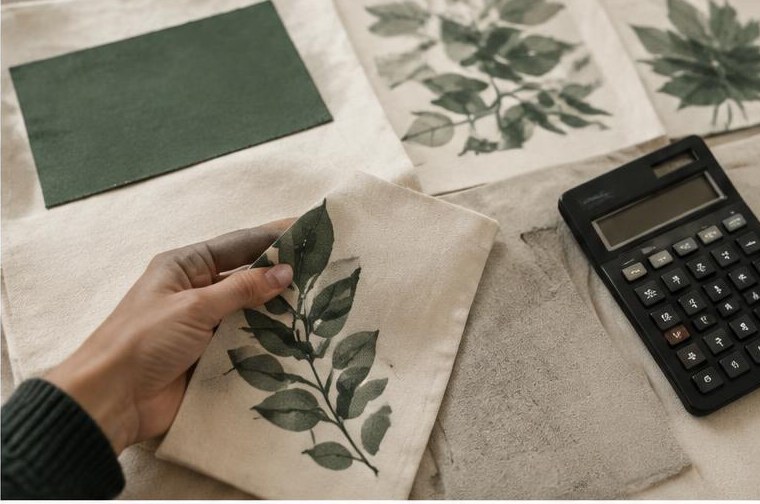
Test the buyer experience
A file should work outside the software where you made it. Open it on another device and check whether instructions are clear. Physical products need sample quality checks when feasible and realistic delivery descriptions.
A download quality check
Open the garden log PDF, print it at the stated size and confirm no labels are cut off. Check contrast and spelling. Write instructions stating that the purchase is a digital file and no physical item is shipped.
- 1Open and print the file if relevant
- 2Check spelling, layout and accessibility
- 3Test download or order fulfillment
Worked example: decisions and trade-offs
Your fictional customer needs a simple weekly planning tool. You create a small original prototype, test whether it is understandable and, for print on demand, order a sample before relying on supplier claims. Product usefulness and rights matter more than catalog size.
Document production cost, platform fees, delivery charges, refunds and support time before setting a test price. Print-on-demand revenue is not profit once supplier costs are deducted. Define formats, dimensions, compatible software and what is included, so buyers know whether customization or physical delivery is part of the offer. Check current supplier delivery and returns rules. A low-cost sample run can uncover problems before customer orders create obligations. Limit the initial test to a budget you can afford without depending on future sales.
Write your answer before looking for a ready-made template. Identify the evidence you used, the assumption most likely to be wrong and the person who should approve the next step. Then describe a different choice and explain why it is less suitable in this particular case.
Turn the method into a bounded plan
A workable plan connects activities, responsibilities and constraints. List the inputs you need, who supplies them, the sequence of work and the definition of completion. Include review time and an explicit way to handle changes. An estimate based only on the visible deliverable overlooks preparation, communication, correction and administration. Compare a normal case with a difficult case before deciding how much work you can accept. If the plan relies on approval or information from someone else, make that dependency visible instead of silently promising a deadline you cannot independently meet.
For any business calculation, distinguish gross receipts from the amount remaining after costs. Use current fees and real measurements where available, label hypothetical numbers clearly and include a downside scenario. Do not interpret an illustrative worksheet as a market rate or earnings prediction. Decide what evidence would justify continuing and what would cause you to pause. A budget-limited experiment is a learning decision, not a guarantee. The written scope should also explain exclusions, revision limits and the point at which extra requests require a new agreement.
Action checklist
- Open and print the file if relevant
- Check spelling, layout and accessibility
- Test download or order fulfillment
Workbook exercise
Create a quality checklist and write plain-English buyer instructions.
Lesson 4
Price and list honestly
Include platform fees, production costs, support time and refunds in your calculations. Show accurate mockups and explain what is and is not included. A digital download should not look like a shipped physical item.

Price for all costs
Platform fees, production, support and refunds affect what remains after a sale. A print-on-demand product may require a larger margin to cover physical fulfillment costs. Use current policies instead of a social-media claim about effortless passive income.
A transparent listing
Describe file types, page sizes, what can be edited and the permitted buyer use. For a physical product, include sizing and fulfillment information. Do not imply that a digital purchase comes with a printed item.
- 1Calculate costs using current fees
- 2Write clear format or sizing information
- 3State delivery and applicable refund terms
Worked example: decisions and trade-offs
Your fictional customer needs a simple weekly planning tool. You create a small original prototype, test whether it is understandable and, for print on demand, order a sample before relying on supplier claims. Product usefulness and rights matter more than catalog size.
A listing should show the actual deliverable, realistic examples and clear limitations. Explain whether the customer receives a download or a physical product. Do not imply a template will guarantee organization, financial success or legal compliance. Choose a small audience-relevant test and record exposure, questions and purchases separately. Views or free downloads show attention, not necessarily willingness to pay. If potential buyers ask the same question repeatedly, improve the description or instructions before expanding the catalog or purchasing more promotion.
Write your answer before looking for a ready-made template. Identify the evidence you used, the assumption most likely to be wrong and the person who should approve the next step. Then describe a different choice and explain why it is less suitable in this particular case.
Run a small test and listen to the evidence
Choose a test that answers one question. You might want to learn whether the intended audience understands the offer, whether the workflow removes a recurring error or whether a prototype solves a specific problem. Decide what to observe before running the test so you do not redefine success after seeing the result. Keep the scale manageable and use legitimate channels with appropriate permission. Explain the test honestly, including its limitations. Interest, compliments and attention can be useful feedback, but they are not interchangeable with verified demand, completed work or confirmed sales.
Record what people actually did or asked, not only what you hoped their reaction meant. Repeated confusion may indicate that your explanation needs revision. A lack of response may reflect audience fit, timing or an unclear offer; it does not by itself establish which factor caused the result. Change one important variable at a time when practical, and avoid spending heavily to rescue a test you have not understood. Respect a person's decision not to participate. A small experiment should improve judgment while preserving trust, privacy and the ability to stop.
Action checklist
- Calculate costs using current fees
- Write clear format or sizing information
- State delivery and applicable refund terms
Workbook exercise
Draft a listing with specifications, limitations, delivery method and usage rights.
Lesson 5
Launch a small test
Launch one product and collect genuine feedback before making many variations. Track visits, conversions, support requests and net margin. Never buy fake reviews or create false scarcity to pressure buyers.
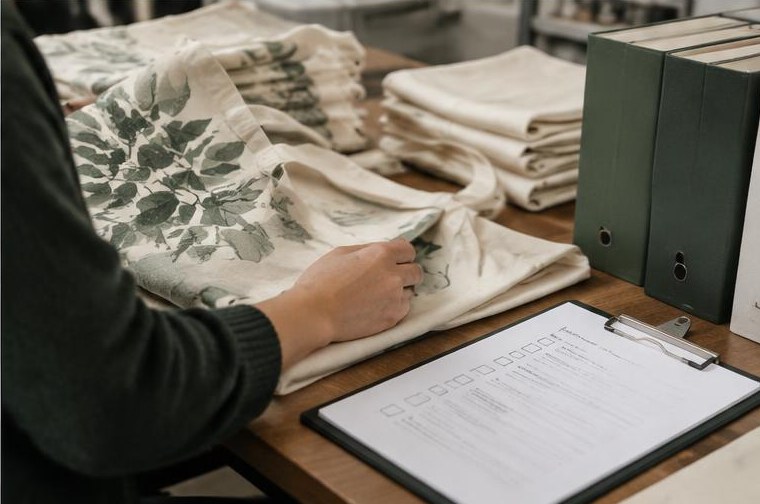
Use a small launch to learn
One complete product provides clearer feedback than a rushed catalog. Record questions that indicate unclear instructions or mismatched expectations. Genuine feedback may reveal a need to revise or stop the product.
A two-week review
Set a modest test budget, record visits and sales if any, and review support questions and net costs. Decide whether to improve the listing, revise the product or end the test. Do not use fake reviews to compensate for weak demand.
- 1Publish one complete product
- 2Collect permission-based feedback
- 3Fix confusion before expanding
Worked example: decisions and trade-offs
Your fictional customer needs a simple weekly planning tool. You create a small original prototype, test whether it is understandable and, for print on demand, order a sample before relying on supplier claims. Product usefulness and rights matter more than catalog size.
After release, review support requests, refund reasons, fulfillment delays and usage feedback. Prioritize defects that prevent the promised use. Keep version records so customers and support staff can identify which edition is involved. Before scaling, verify that margins remain workable under realistic return and delivery conditions. Check that revised assets still satisfy licensing requirements. A responsible growth decision compares demand, quality and service capacity; producing many variations of an untested design does not substitute for evidence that customers find the original useful.
Write your answer before looking for a ready-made template. Identify the evidence you used, the assumption most likely to be wrong and the person who should approve the next step. Then describe a different choice and explain why it is less suitable in this particular case.
Review quality, document learning and decide what comes next
Close the loop by comparing the result with the definition of completion. Inspect a sample of the work, verify important totals or claims and list unresolved issues. Distinguish a finished deliverable from an outcome influenced by many external factors. A useful review names what worked, what failed and what remains uncertain. Include time spent and recurring costs in the decision, not only the most attractive result. When the evidence is incomplete, say so. Stopping an unsuitable method or narrowing its scope can be a sensible outcome of the learning process.
Turn the review into a repeatable improvement: update the checklist, clarify an instruction, add an approval step or correct an assumption. Preserve records needed for continuity and compliance, but do not retain private information without a reason and an agreed policy. Review permissions and access when work ends. If you choose to continue, define the next small milestone and the evidence required before scaling. Steady, explainable progress is more useful than a vague growth target. Keep checking official requirements and seek qualified advice when the work moves beyond your competence.
Action checklist
- Publish one complete product
- Collect permission-based feedback
- Fix confusion before expanding
Workbook exercise
Write a two-week test plan with a spending cap and criteria for improving or stopping.
Your first 30 days
Before committing, estimate setup costs, recurring subscriptions, time, fees and possible refunds. Separate gross receipts from net proceeds and reserve records for tax review. Do not borrow or make a major purchase simply to test an unproven idea. Verify client identities using contact details you find independently. Reject overpayment requests and checks that require you to send money back before funds are genuinely settled. Share only the personal information necessary through a verified, secure process. If a client pressures you to ignore safeguards, pause or walk away. Check state and local registration or licensing requirements for your activity, and seek qualified help when uncertain.
Week 1 — Read the book, inventory your existing skills and choose one specific audience or buyer. Write down the problem you intend to solve.
Week 2 — Build the practice deliverable described in the chapters. Check accuracy, rights, privacy and quality before anyone else uses it.
Week 3 — Have a few relevant conversations or run a small, budget-limited test. Record feedback without pressuring people or promising results.
Week 4 — Review costs, time, feedback and any confirmed revenue. Decide whether to improve, repeat or stop the test. No sale or client is guaranteed.
Tools to explore
Canva · Etsy · Printful. These are optional examples, not endorsements. Check current pricing, privacy settings and terms.
Resources & safe next steps
Never pay to unlock a job or supposed earnings. Keep income and expense records, protect private information and check the rules that apply to your work. Ask qualified professionals about tax, legal or licensing questions.
Module discussion
Loading discussion…
Karen H. · Tucson, AZ
2 days ago
My late husband did all the computer work, so I was nervous. The plain language here gave me the confidence to set things up myself.
Deborah E. · Raleigh, NC
6 days ago
I retired from teaching last spring. This module showed me how to turn lesson planning into something people will gladly pay for.
Martha Y. · Des Moines, IA
9 days ago
The exercise at the end of each chapter is the best part. Short enough to finish, specific enough to matter.
Michael S. · Savannah, GA
12 days ago
Landed my first small client after following the outreach steps. Nothing glamorous, but it is real and it is mine.
Gary W. · Knoxville, TN
16 days ago
The worked example in this module finally made the first step feel concrete. I wrote my offer on one page before lunch.
Kenneth M. · Boise, ID
19 days ago
Chapter two answered the question I had been stuck on for months: how to price my time without underselling decades of experience.
Patricia G. · Tampa, FL
22 days ago
My late husband did all the computer work, so I was nervous. The plain language here gave me the confidence to set things up myself.
Donna C. · Reno, NV
26 days ago
I retired from teaching last spring. This module showed me how to turn lesson planning into something people will gladly pay for.
Diane B. · Spokane, WA
29 days ago
The exercise at the end of each chapter is the best part. Short enough to finish, specific enough to matter.