Revolution App Online School
YouTube Creator
Develop a practical channel around knowledge people want to watch.
6 video classes · 5 written lessons with exercises
Video classes
 Revolution AppLesson 1
How to Create a YouTube Channel for Beginners in 2026 (Step-by-Step)
vidIQ · Video 1 of 6
Lesson 1 reviews 5.0 · 4 reviews
Terry F.Green Bay, WI · 41 days ago
Liked the honest part about consistency mattering more than fancy equipment. Thank you for including this one.
Margaret M.Green Bay, WI · 90 days ago
Liked the honest part about consistency mattering more than fancy equipment. Highly recommend it.
Teresa W.Green Bay, WI · 139 days ago
Liked the honest part about consistency mattering more than fancy equipment. Clear audio and no rushing.
Rose H.Green Bay, WI · 8 days ago
Liked the honest part about consistency mattering more than fancy equipment. I'll watch the next lesson tonight.
Introduction
This book is a practical starting point, not a promise of income. Read the chapters in order, then test one small offer or product before spending heavily. Use invented information for practice and keep confidential client information out of your portfolio. Laws, taxes, licensing and platform terms may vary; consult current official guidance and qualified professionals when needed.
Your goal: A channel plan, first video script and publishing checklist.
All scenarios and pricing calculations are illustrative, not promises of business results.
Lesson 1
Choose a channel promise
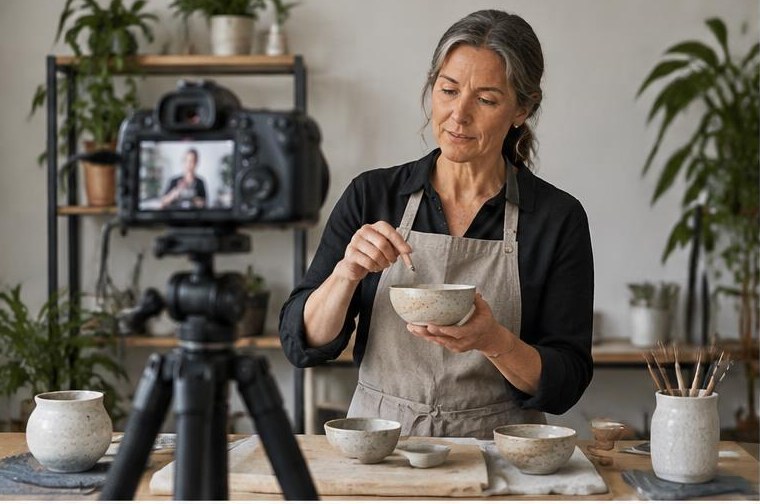
Choose one audience and a repeatable type of useful video. Start with skills or experiences you can demonstrate. A channel can begin with a phone; expensive equipment is not a prerequisite for testing an idea.

Make a promise you can deliver repeatedly
Choose a viewer problem that supports several useful videos. A narrow topic helps you plan and gives viewers a reason to return. Begin with the equipment you have and evaluate your process before making a large purchase.
A starter series
A beginner gardening channel could cover choosing a container, checking soil moisture, repotting a seedling and recognizing common care mistakes. Each video should answer one question without promising a perfect harvest.
- 1Define audience and problem
- 2List ten specific video ideas
- 3Choose a realistic publishing rhythm
Worked example: decisions and trade-offs
Your sample channel explains a practical hobby to adult beginners. You outline an original demonstration, record a simple episode and evaluate whether viewers understand the promised task. The project teaches content creation; it never pays members for watching or studying.
Choose a specific audience question you can answer accurately and safely. A channel about everything is harder to plan than a series solving related beginner problems. Write a clear promise for the episode, then check that the planned demonstration actually fulfills it. Consider whether the task needs qualifications or warnings. Content creation involves planning, recording, editing, publishing and review; it is not simply uploading a clip and waiting for income. Verify current platform eligibility and rights rules rather than assuming every account can earn revenue.
Write your answer before looking for a ready-made template. Identify the evidence you used, the assumption most likely to be wrong and the person who should approve the next step. Then describe a different choice and explain why it is less suitable in this particular case.
Define the problem before choosing a tool
Write the starting condition in plain language. Who experiences the problem, how often does it occur and what does it prevent them from doing? Separate an observed fact from a guess about its cause. A statement like the process takes too long needs an example and a baseline; a statement like everyone needs an app is already assuming the solution. Use a short conversation or a fictional practice case to identify what matters. Ask which constraints cannot change, including available time, existing systems and permissions.
Next, define a modest result you can verify. A useful result is a deliverable or observable improvement, not a claim that someone will become successful. Record what is outside your assignment and which decisions belong to another person. This boundary is not an obstacle to being helpful: it prevents you from taking responsibility for matters you cannot control. Before moving forward, explain the problem and proposed result in one paragraph. If that paragraph is difficult to write, reduce the scope until the relationship between need and work is clear.
Action checklist
- Define audience and problem
- List ten specific video ideas
- Choose a realistic publishing rhythm
Workbook exercise
Write a channel promise and outline a four-video starter series.
Lesson 2
Script a useful first video
Open with the question you will answer, then deliver a clear demonstration. Write a short outline rather than memorizing a long script. End with a recap and a relevant next step, not an unsupported promise.
Script for clarity rather than performance
The opening should name the problem and set a realistic expectation. Demonstrate the important steps and avoid filler. Check facts before recording and do not copy another creator’s script or use confidential material.
A short outline
Start: today we will repot one seedling. Show materials, demonstrate removing the plant carefully, explain the new container and recap the care checks. End with the next relevant question rather than a claim about guaranteed success.
- 1Write opening, three steps and recap
- 2Plan demonstration shots
- 3Check factual claims and sources
Worked example: decisions and trade-offs
Your sample channel explains a practical hobby to adult beginners. You outline an original demonstration, record a simple episode and evaluate whether viewers understand the promised task. The project teaches content creation; it never pays members for watching or studying.
Outline the episode around the problem, necessary context, demonstration and result. Prepare a shot list that shows the important steps clearly. Test sound and lighting with a short recording before filming the entire task. Use original or appropriately licensed assets and obtain permissions for recognizable people where needed. A simple clear demonstration is more useful than elaborate editing that conceals the process. Include captions and readable labels, and avoid background information that delays the answer without helping the beginner understand it.
Write your answer before looking for a ready-made template. Identify the evidence you used, the assumption most likely to be wrong and the person who should approve the next step. Then describe a different choice and explain why it is less suitable in this particular case.
Build a practice example that can fail
Practice is most valuable when it reveals errors before a real customer is affected. Create a small example containing one normal case, one incomplete case and one exception. Use invented information and make the expected outcome explicit before you begin. Then perform the work using the same sequence you would use in a real assignment. Record where you hesitated, which instructions were unclear and which assumptions were unsupported. A sample that always succeeds because it avoids difficult cases teaches less than a realistic example with a visible correction.
Review the sample as if someone else had created it. Can a beginner understand the output? Can a reviewer trace an important decision back to its evidence? Is private information exposed unnecessarily? Ask a willing reviewer to follow the instructions without coaching, then note where they need help. Improve the process rather than blaming the reader. Preserve the revised version and a short change log so your next attempt starts from what you learned. The objective is dependable work, not a perfect-looking portfolio piece with no explanation of how it was made.
Action checklist
- Write opening, three steps and recap
- Plan demonstration shots
- Check factual claims and sources
Workbook exercise
Draft a script for a three-minute how-to with one concrete outcome.
Lesson 3
Record and edit clearly
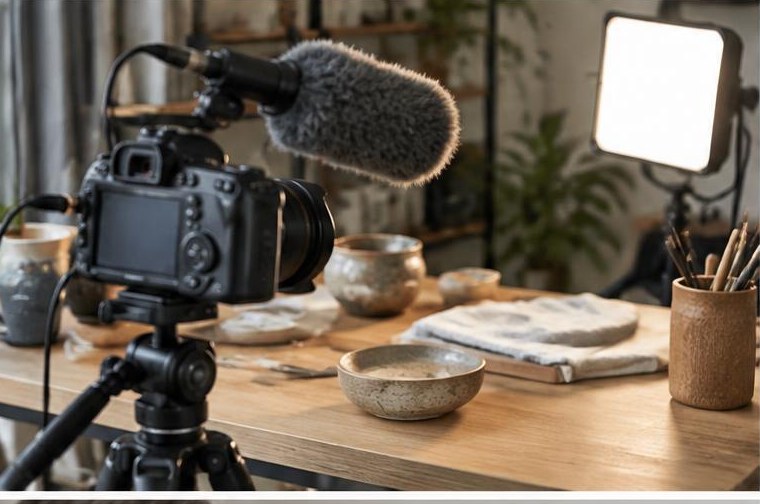
Clear audio and understandable demonstrations matter more than cinematic effects. Record a short sound check, frame the task and remove distracting pauses. Add captions and use music or visuals only when you have the needed rights.
Record a test before a full shoot
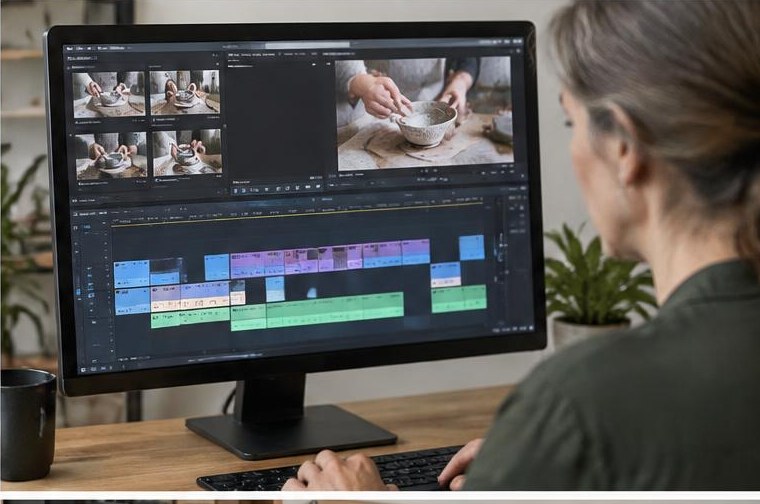
A short recording reveals audio problems, glare and unreadable labels. Frame the task so the viewer can inspect it. Edit distracting gaps and check captions manually because automatic transcription can misstate names or important instructions.
A simple production check
Listen to thirty seconds with headphones, confirm the task is visible and check whether spoken directions make sense without the image. Use original footage or properly licensed assets and keep a record of permissions.
- 1Test sound and lighting
- 2Record a simple demonstration
- 3Edit and review captions for accuracy
Worked example: decisions and trade-offs
Your sample channel explains a practical hobby to adult beginners. You outline an original demonstration, record a simple episode and evaluate whether viewers understand the promised task. The project teaches content creation; it never pays members for watching or studying.
Match the title and thumbnail to what the episode actually delivers. Do not create a promise the video cannot satisfy. Check audio, captions, factual claims and rights before publication. Keep a record of sources for technical explanations that could change. Budget for time as well as optional equipment, and avoid major purchases before a small test demonstrates that you enjoy and can sustain the work. Sponsorships and affiliate relationships require appropriate disclosure; the platform's policies should be checked separately from general advertising obligations.
Write your answer before looking for a ready-made template. Identify the evidence you used, the assumption most likely to be wrong and the person who should approve the next step. Then describe a different choice and explain why it is less suitable in this particular case.
Turn the method into a bounded plan
A workable plan connects activities, responsibilities and constraints. List the inputs you need, who supplies them, the sequence of work and the definition of completion. Include review time and an explicit way to handle changes. An estimate based only on the visible deliverable overlooks preparation, communication, correction and administration. Compare a normal case with a difficult case before deciding how much work you can accept. If the plan relies on approval or information from someone else, make that dependency visible instead of silently promising a deadline you cannot independently meet.
For any business calculation, distinguish gross receipts from the amount remaining after costs. Use current fees and real measurements where available, label hypothetical numbers clearly and include a downside scenario. Do not interpret an illustrative worksheet as a market rate or earnings prediction. Decide what evidence would justify continuing and what would cause you to pause. A budget-limited experiment is a learning decision, not a guarantee. The written scope should also explain exclusions, revision limits and the point at which extra requests require a new agreement.
Action checklist
- Test sound and lighting
- Record a simple demonstration
- Edit and review captions for accuracy
Workbook exercise
Record a 30-second test and note one audio, framing and accessibility improvement.
Lesson 4
Publish with rights and disclosures
Use an accurate title and thumbnail. Check rights for every music track, image and clip, and disclose sponsorships or affiliate relationships clearly. Use the platform’s paid-promotion controls when applicable, alongside proper disclosures.
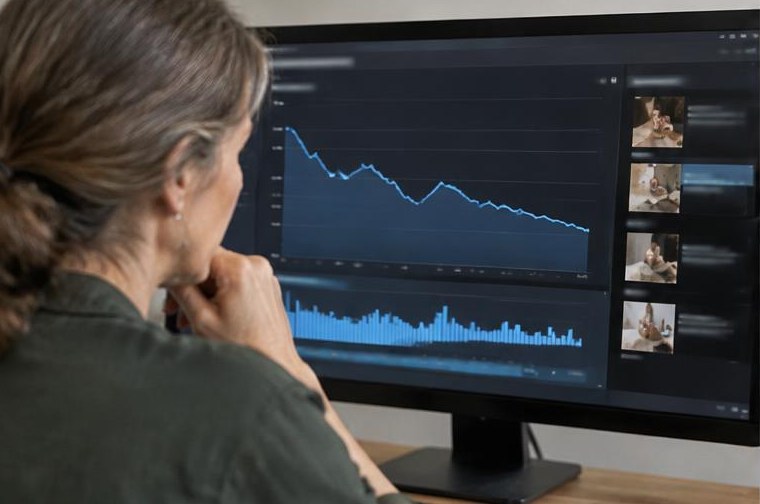
Publishing includes legal and accuracy checks
The title and thumbnail should accurately represent the video. Check commercial rights for music and visuals, including background material. Paid promotion tools do not replace a clear disclosure of a brand relationship.
A pre-publish review
Check title accuracy, caption errors, music rights, product claims, sponsorship disclosures and description links. If you cannot verify a claim or license, remove that element before publishing.
- 1Write title and description matching the content
- 2Check copyright and commercial rights
- 3Add clear relationship disclosures
Worked example: decisions and trade-offs
Your sample channel explains a practical hobby to adult beginners. You outline an original demonstration, record a simple episode and evaluate whether viewers understand the promised task. The project teaches content creation; it never pays members for watching or studying.
Audience retention can reveal where people leave, but it does not explain the cause on its own. Compare a drop with the episode structure: did the answer arrive, did the introduction run long or did a demonstration become unclear? Form one concrete hypothesis, such as moving the finished example earlier. Test it on comparable topics and lengths rather than interpreting a single upload as a universal rule. View counts may reflect distribution or audience fit. They cannot establish whether the explanation was accurate or useful to everyone.
Write your answer before looking for a ready-made template. Identify the evidence you used, the assumption most likely to be wrong and the person who should approve the next step. Then describe a different choice and explain why it is less suitable in this particular case.
Run a small test and listen to the evidence
Choose a test that answers one question. You might want to learn whether the intended audience understands the offer, whether the workflow removes a recurring error or whether a prototype solves a specific problem. Decide what to observe before running the test so you do not redefine success after seeing the result. Keep the scale manageable and use legitimate channels with appropriate permission. Explain the test honestly, including its limitations. Interest, compliments and attention can be useful feedback, but they are not interchangeable with verified demand, completed work or confirmed sales.
Record what people actually did or asked, not only what you hoped their reaction meant. Repeated confusion may indicate that your explanation needs revision. A lack of response may reflect audience fit, timing or an unclear offer; it does not by itself establish which factor caused the result. Change one important variable at a time when practical, and avoid spending heavily to rescue a test you have not understood. Respect a person's decision not to participate. A small experiment should improve judgment while preserving trust, privacy and the ability to stop.
Action checklist
- Write title and description matching the content
- Check copyright and commercial rights
- Add clear relationship disclosures
Workbook exercise
Create a publishing checklist covering accuracy, rights, captions and disclosure.
Lesson 5
Understand growth and monetization
YouTube monetization depends on current eligibility rules, reviews and content policies. Do not assume a video earns money because it receives views. Evaluate audience retention and useful feedback before buying equipment or chasing ad revenue.

Views and earnings are different
The Partner Program has eligibility criteria and policy reviews that can change. Eligibility does not mean every video is monetized or profitable. Review useful audience feedback and costs before treating the channel as dependable income.
A monthly improvement note
Record videos published, audience questions, retention patterns and expenses. Choose one improvement, such as clearer audio or a shorter introduction. Consult current official monetization requirements instead of relying on outdated threshold summaries.
- 1Read current Partner Program requirements
- 2Review retention and viewer questions
- 3Plan one improvement for the next video
Worked example: decisions and trade-offs
Your sample channel explains a practical hobby to adult beginners. You outline an original demonstration, record a simple episode and evaluate whether viewers understand the promised task. The project teaches content creation; it never pays members for watching or studying.
Develop a manageable publishing routine with time for fact checks, editing and responding to relevant questions. Review recurring misunderstandings and address them in future episodes or corrections. Keep original project files and licenses organized. If monetization becomes available, separate estimated figures from confirmed proceeds and account for expenses. Do not assume growth is linear or guaranteed. A sustainable channel serves a defined audience consistently, updates errors openly and chooses experiments based on evidence rather than escalating production costs after one promising result.
Write your answer before looking for a ready-made template. Identify the evidence you used, the assumption most likely to be wrong and the person who should approve the next step. Then describe a different choice and explain why it is less suitable in this particular case.
Review quality, document learning and decide what comes next
Close the loop by comparing the result with the definition of completion. Inspect a sample of the work, verify important totals or claims and list unresolved issues. Distinguish a finished deliverable from an outcome influenced by many external factors. A useful review names what worked, what failed and what remains uncertain. Include time spent and recurring costs in the decision, not only the most attractive result. When the evidence is incomplete, say so. Stopping an unsuitable method or narrowing its scope can be a sensible outcome of the learning process.
Turn the review into a repeatable improvement: update the checklist, clarify an instruction, add an approval step or correct an assumption. Preserve records needed for continuity and compliance, but do not retain private information without a reason and an agreed policy. Review permissions and access when work ends. If you choose to continue, define the next small milestone and the evidence required before scaling. Steady, explainable progress is more useful than a vague growth target. Keep checking official requirements and seek qualified advice when the work moves beyond your competence.
Action checklist
- Read current Partner Program requirements
- Review retention and viewer questions
- Plan one improvement for the next video
Workbook exercise
Create a monthly review with useful metrics, expenses and a next-video experiment.
Your first 30 days
Before committing, estimate setup costs, recurring subscriptions, time, fees and possible refunds. Separate gross receipts from net proceeds and reserve records for tax review. Do not borrow or make a major purchase simply to test an unproven idea. Verify client identities using contact details you find independently. Reject overpayment requests and checks that require you to send money back before funds are genuinely settled. Share only the personal information necessary through a verified, secure process. If a client pressures you to ignore safeguards, pause or walk away. Check state and local registration or licensing requirements for your activity, and seek qualified help when uncertain.
Week 1 — Read the book, inventory your existing skills and choose one specific audience or buyer. Write down the problem you intend to solve.
Week 2 — Build the practice deliverable described in the chapters. Check accuracy, rights, privacy and quality before anyone else uses it.
Week 3 — Have a few relevant conversations or run a small, budget-limited test. Record feedback without pressuring people or promising results.
Week 4 — Review costs, time, feedback and any confirmed revenue. Decide whether to improve, repeat or stop the test. No sale or client is guaranteed.
Tools to explore
YouTube Studio · DaVinci Resolve · Smartphone. These are optional examples, not endorsements. Check current pricing, privacy settings and terms.
Resources & safe next steps
Never pay to unlock a job or supposed earnings. Keep income and expense records, protect private information and check the rules that apply to your work. Ask qualified professionals about tax, legal or licensing questions.
Module discussion
Loading discussion…
Barbara P. · Savannah, GA
1 day ago
The exercise at the end of each chapter is the best part. Short enough to finish, specific enough to matter.
Carol H. · Knoxville, TN
4 days ago
Landed my first small client after following the outreach steps. Nothing glamorous, but it is real and it is mine.
Brenda C. · Boise, ID
8 days ago
The worked example in this module finally made the first step feel concrete. I wrote my offer on one page before lunch.
Robert W. · Tampa, FL
11 days ago
Chapter two answered the question I had been stuck on for months: how to price my time without underselling decades of experience.
Thomas E. · Reno, NV
14 days ago
My late husband did all the computer work, so I was nervous. The plain language here gave me the confidence to set things up myself.
Frank H. · Spokane, WA
18 days ago
I retired from teaching last spring. This module showed me how to turn lesson planning into something people will gladly pay for.
Gregory E. · Omaha, NE
21 days ago
The exercise at the end of each chapter is the best part. Short enough to finish, specific enough to matter.
Karen K. · Columbus, OH
24 days ago
Landed my first small client after following the outreach steps. Nothing glamorous, but it is real and it is mine.
Deborah S. · Portland, ME
28 days ago
The worked example in this module finally made the first step feel concrete. I wrote my offer on one page before lunch.
Martha W. · Albany, NY
31 days ago
Chapter two answered the question I had been stuck on for months: how to price my time without underselling decades of experience.